
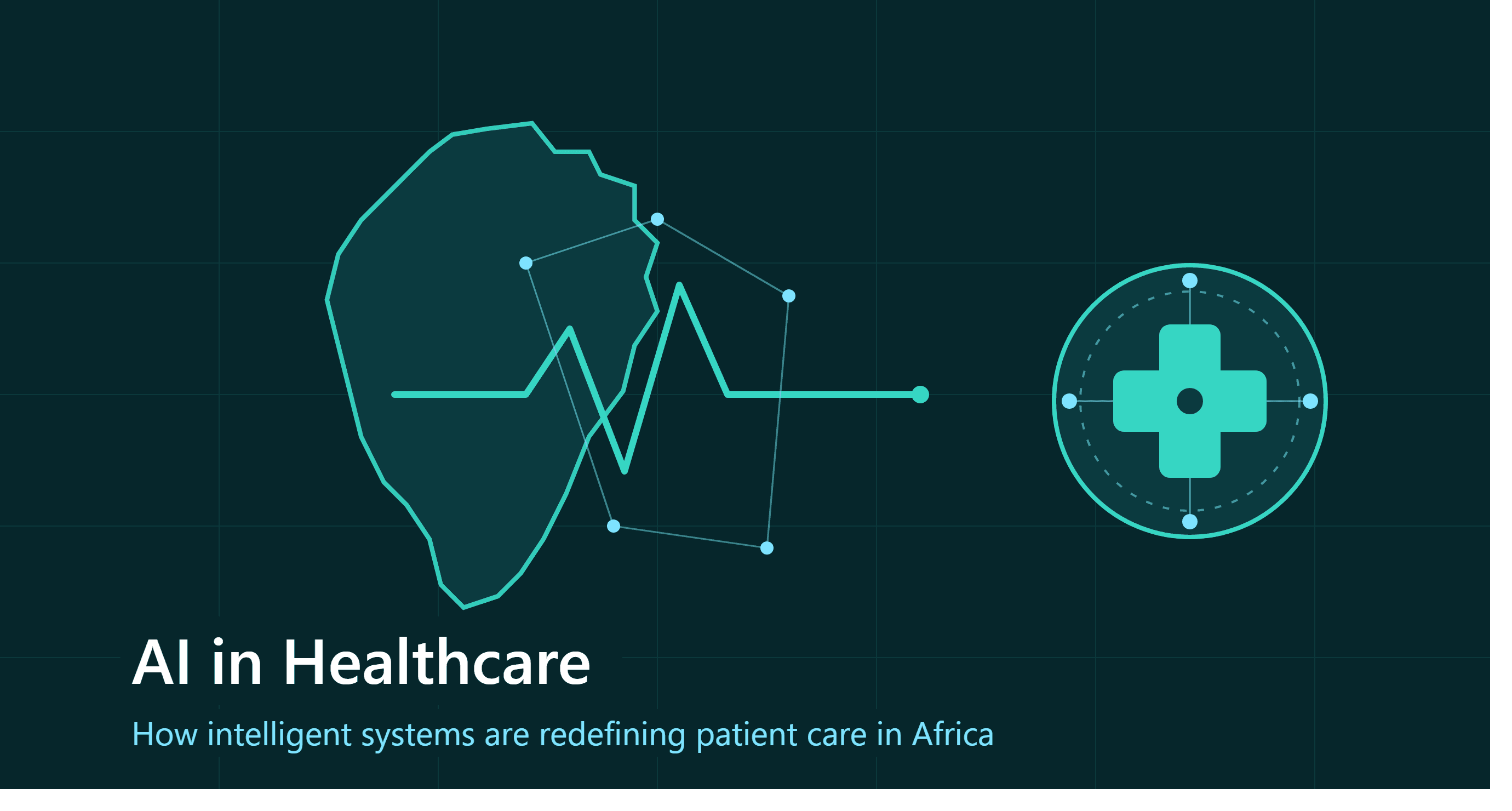
AI in Healthcare: How Intelligent Systems Are Redefining Patient Care in Africa
Artificial Intelligence is transforming healthcare delivery across Africa by improving diagnosis, enabling telemedicine, and strengthening hospital operations. This article explores how AI-powered systems are enhancing patient care, supporting medical professionals, and driving a shift toward more accessible, data-driven, and efficient healthcare systems across the continent.
Introduction
Healthcare systems across Africa are under increasing pressure to deliver faster, more accurate, and more accessible care to rapidly growing populations. Limited infrastructure, shortage of medical professionals, and uneven access to healthcare services continue to challenge effective delivery.
Artificial Intelligence (AI) is emerging as a transformative force capable of addressing these gaps by enhancing diagnostics, improving operational efficiency, and expanding access to care.
At UNICCON Group, AI-driven healthcare innovation is a core part of our mission to build scalable, intelligent systems that improve health outcomes across the continent.
The Current State of Healthcare Delivery in Africa
Many healthcare systems in Africa still rely heavily on manual processes, paper-based records, and fragmented data systems. This creates inefficiencies such as:
Delayed diagnosis and treatment
Poor patient data management
Inefficient hospital workflows
Limited access to specialist care in rural areas
These challenges often result in preventable complications and increased healthcare costs.
Digital transformation is therefore not just an upgrade—it is a necessity.
How AI Is Transforming Diagnosis and Clinical Decision-Making
AI systems are increasingly being used to support medical professionals in diagnosing diseases more accurately and efficiently.
Key applications include:
Medical imaging analysis (detecting abnormalities in X-rays, CT scans, and MRIs)
Predictive analytics for early disease detection
Clinical decision support systems for treatment recommendations
Symptom-based triage systems for faster patient assessment
These tools do not replace healthcare professionals but enhance their capabilities, enabling faster and more informed decisions.
Telemedicine and Remote Healthcare Access
Telemedicine is one of the most impactful applications of digital health in Africa.
Through virtual consultations and remote monitoring systems, patients can now access healthcare services without traveling long distances.
Benefits include:
Improved access to specialists in underserved regions
Reduced hospital congestion
Faster medical intervention
Lower healthcare costs for patients
Platforms like intelligent telemedicine systems are helping bridge the gap between patients and providers, especially in rural and hard-to-reach areas.
AI-Powered Hospital Management Systems
Beyond patient care, AI is also transforming hospital operations.
Smart hospital systems can:
Automate appointment scheduling
Optimize bed allocation and resource usage
Manage electronic health records efficiently
Predict patient admission trends
These improvements reduce administrative burdens and allow healthcare workers to focus more on patient care.
Data-Driven Public Health Insights
AI enables health institutions to analyze large datasets to identify trends and patterns in disease outbreaks, population health, and treatment effectiveness.
This supports:
Early detection of epidemics
Improved vaccination strategies
Better allocation of medical resources
Evidence-based health policymaking
Data-driven healthcare systems are essential for building resilient national health infrastructures.
Ethical and Data Privacy Considerations
As healthcare becomes more digital, protecting patient data becomes critical.
Key considerations include:
Ensuring confidentiality of patient records
Maintaining data integrity and accuracy
Preventing unauthorized access to sensitive information
Building transparent AI systems that can be audited
Trust is essential in healthcare systems, and strong governance frameworks must accompany technological innovation.
The Role of Indigenous Innovation in Digital Health
Africa’s healthcare challenges require locally designed solutions.
Indigenous innovation ensures that AI systems:
Reflect local disease patterns and healthcare realities
Are accessible and affordable for healthcare providers
Support multilingual and culturally relevant interfaces
Reduce dependence on imported healthcare technologies
UNICCON Group is committed to building solutions that are tailored specifically to African healthcare systems.
The Future of AI in African Healthcare
The future of healthcare in Africa will be shaped by intelligent, connected systems that combine AI, IoT, and digital platforms.
We are moving toward a future where:
Patients receive early diagnosis through AI screening tools
Doctors are supported by real-time clinical intelligence
Healthcare systems are predictive rather than reactive
Rural communities gain equal access to quality care
This transformation will require collaboration between governments, private sector players, and technology innovators.
Conclusion
Artificial Intelligence is not replacing healthcare professionals—it is empowering them.
By improving diagnostics, streamlining operations, and expanding access to care, AI is redefining what is possible in African healthcare systems.
At UNICCON Group, we are committed to building intelligent healthcare solutions that are accessible, scalable, and impactful—ensuring that no one is left behind in the digital health revolution.
Share Intelligence
Export Protocol
Related Tags
Stay Ahead of the Curve
Subscribe to UNICCON Insights and receive the latest research and intelligence briefs directly to your terminal.